
Third Meeting: “A Living Agenda: The Peace Agreement in the Regions” | Bogotá
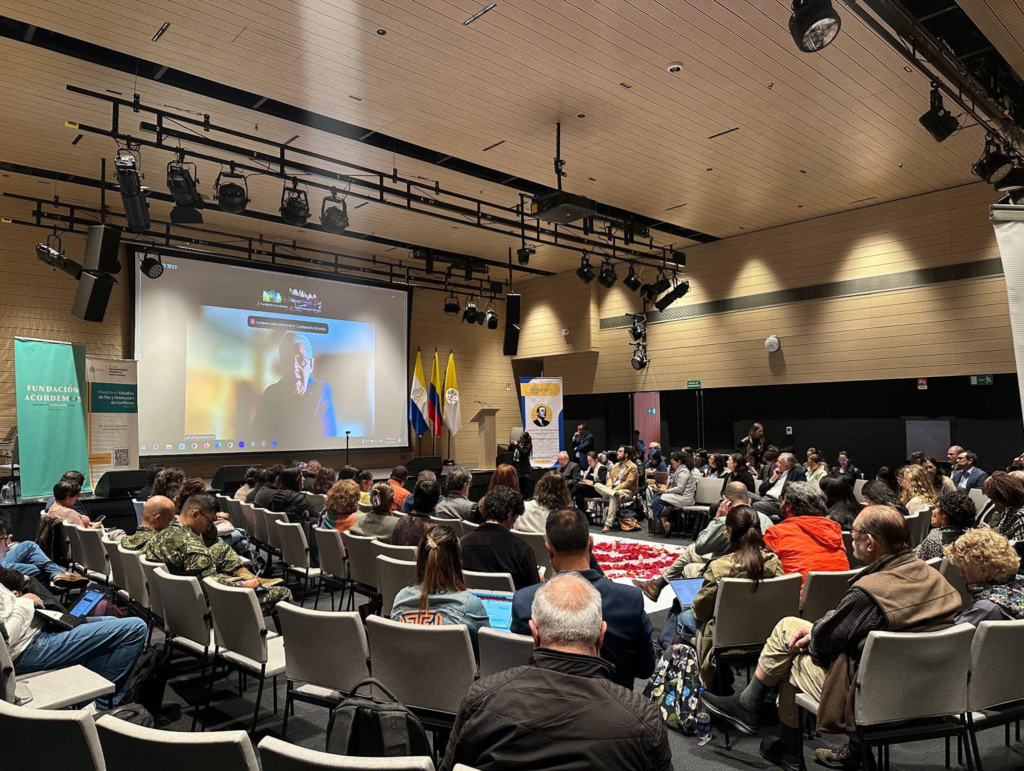
November marks the tenth anniversary of the signing of the Peace Agreement between the Colombian government and the FARC-EP, and in Bogotá, the Acordemos Foundation, with support from the Norwegian Embassy through the UNDP and the Alfredo Vázquez Carrizosa Human Rights Institute at Javeriana University, brought together community leaders, the Ombudsman, the UN Verification Mission, […]
Second Meeting: “A Living Agenda: The Peace Agreement in the Regions” | Cali
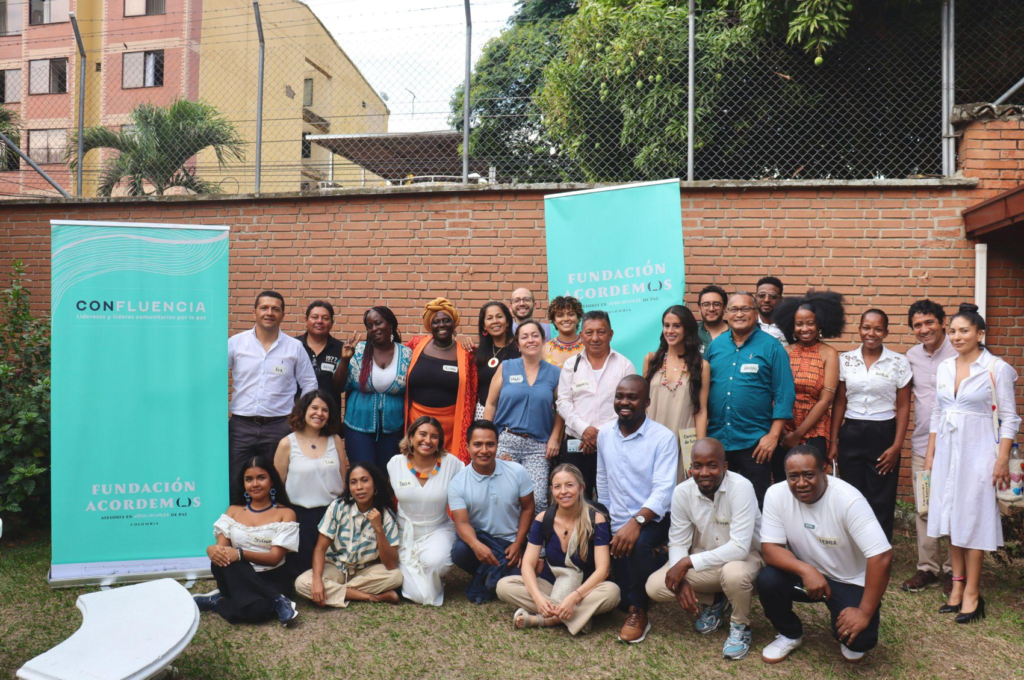
Ten years after the signing of the Peace Agreement, the Acordemos Foundation brought together 39 community leaders from Valle del Cauca, Cauca, La Guajira, Cesar, southern Córdoba, Nariño, and Chocó in Cali, along with representatives from government institutions, oversight bodies, and international cooperation agencies, to take stock of the agreement’s implementation. Three key points emerged […]
From reintegration into the community to everyday life within the community
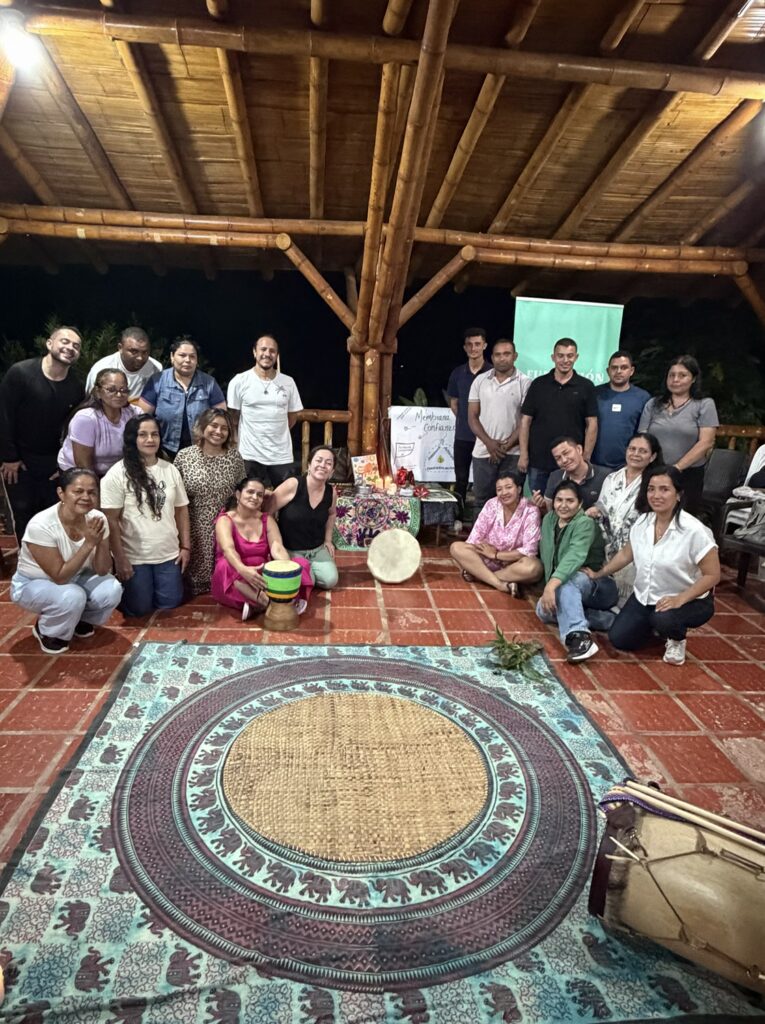
From 26 to 29 June 2026, the Acordemos Foundation, the Peace, Security and Care Laboratory and the Agency for Reintegration and Normalisation (ARN), with the support of the Friedrich Ebert Stiftung (FESCOL), organised a knowledge-sharing event in Pueblo Bello (César) with signatories to the Peace Agreement from the municipality of Fonseca, in the district of […]
A Living Agenda: The Peace Agreement in the Regions
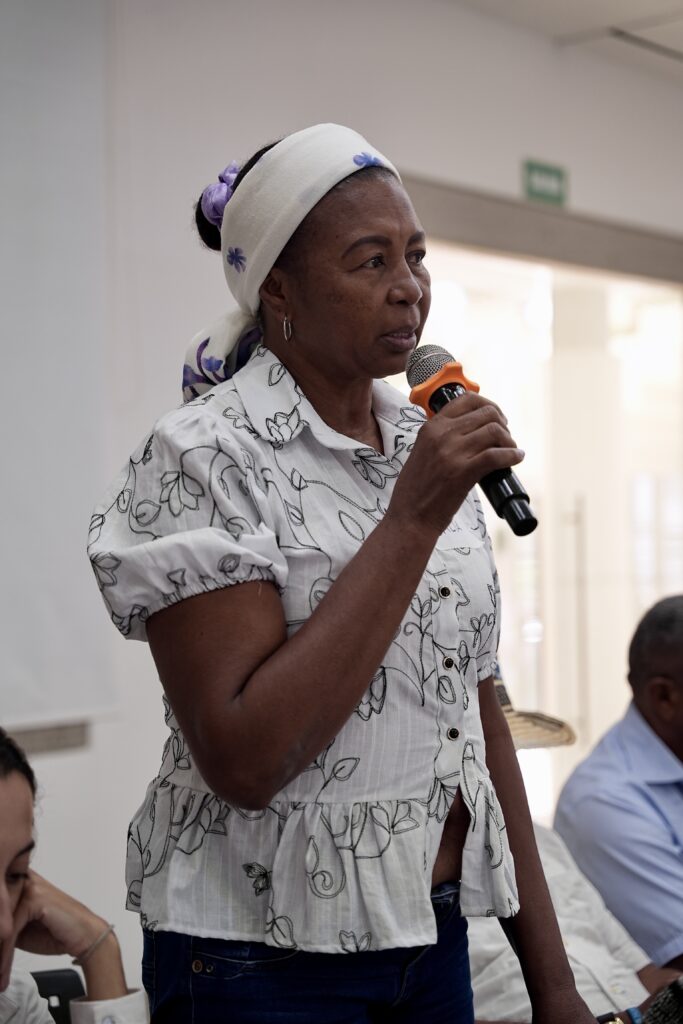
In Valledupar, together with 48 people (20 men, 28 women) – including community leaders from Magdalena, César, La Guajira, Putumayo, Arauca, Meta, Guaviare and Córdoba, as well as representatives from institutions and civil society – the Acordemos Foundation launched its strategy “A Living Agenda: the Peace Agreement in the Regions”, which aims to exchange views […]
Bojayá: Memory, Dignity, and Commitment to Victims
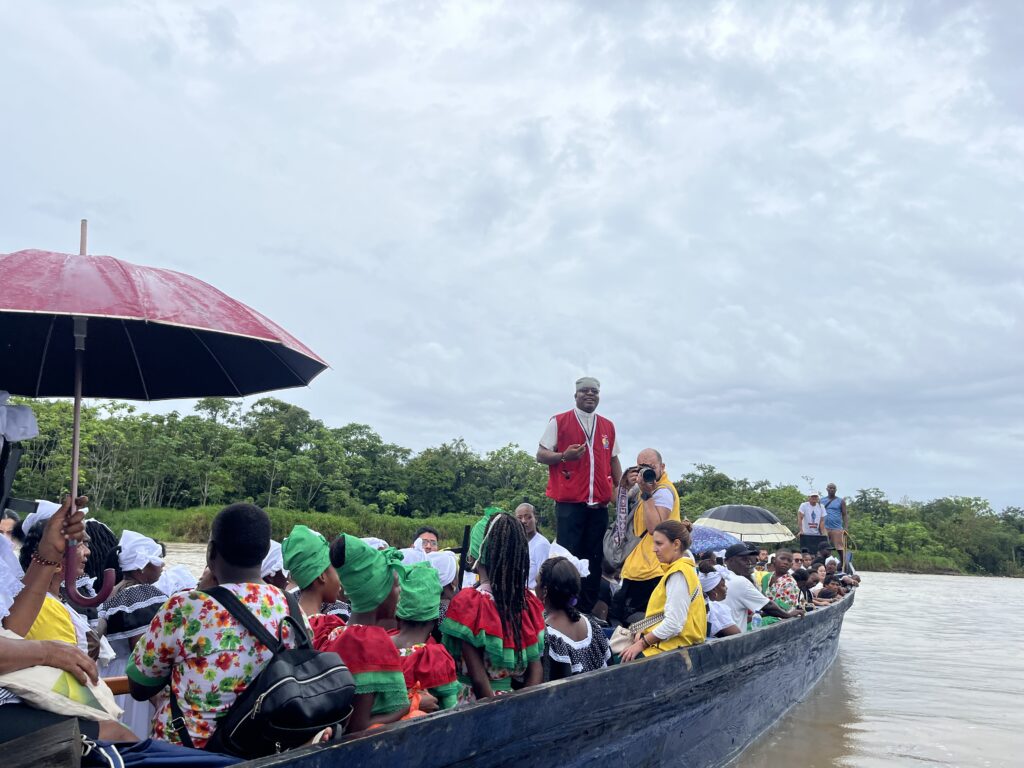
Acordemos accompanied the commemoration of the 24th anniversary of the Bojayá massacre, supporting spaces for memory and dignity-building led by the community. The day was marked by anticipation regarding the act of acknowledging responsibility and requesting forgiveness by the Colombian State, as part of its commitments to repair relations with victims. Acordemos’ presence reaffirms its commitment to communities affected by the conflict and to the importance of advancing the fulfillment of measures of truth, recognition, and reparation.
The National Confluence: A River That Doesn’t Stop
Community leaders are at the center of peace-building in Colombia—and the National Confluence demonstrates this. In two recent meetings, its members gathered as part of the Peasant Convention to review their organizational structure, advance peasant popular consultation, and define their representatives; and on the other hand, to learn about and take ownership of the Illicit Crops Roadmap. Two meetings, one message: the Confluence continues to grow and occupy the spaces that correspond to it.
First Phase of Constructing the Illicit Crops Roadmap
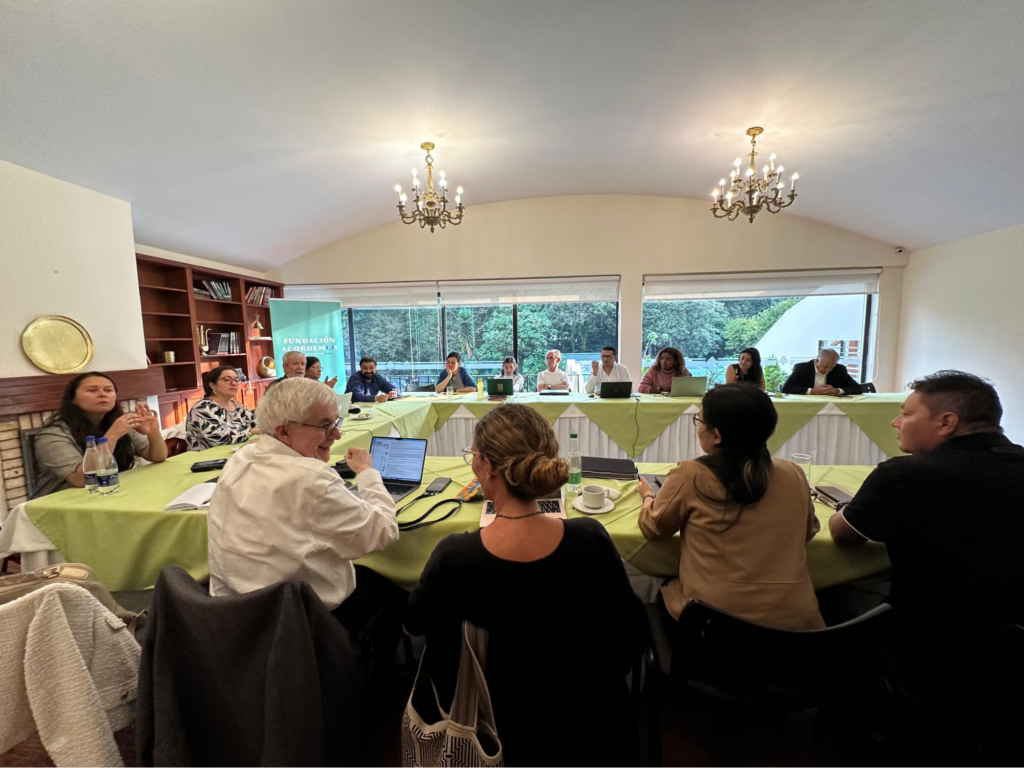
Fundación Acordemos completed the first phase of constructing the Illicit Crops Roadmap, within the framework of the project ‘Peace, Security and Illicit Crops in Colombia: Lessons Learned and Policy Recommendations for Critical Issues in 2026,’ supported by the British Embassy and developed jointly with Fundación Ideas para la Paz (FIP). The Illicit Crops Roadmap proposes to sustainably and irreversibly reduce coca cultivation in the country, as well as territorial dependence on this economy and associated criminal governance, through sequential, progressive, and territorially differentiated interventions that allow for re-establishing institutional control and enabling viable transitions toward legal economies. This first phase included multiple exchanges with experts (42 consultations with community leaders, 21 interviews with experts in environmental, security, rural development, territorial development, private sector, government officials and former officials, Armed Forces, international organizations, and academia, among others, and 5 technical working groups on recommendations). The project prioritized Nariño and Guaviare to conduct field work and extract key elements to enrich the discussion from a territorial perspective.
Support for the PDET Liaisons of the Ombudsman’s Office
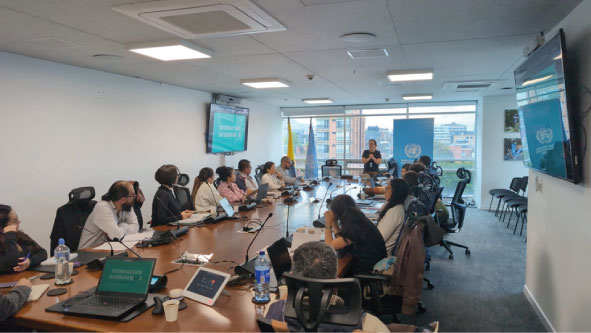
At the request of the Office of the Ombudsman for Transitional Justice and Peace, Acordemos accompanied the induction process for the PDET Liaisons that the Ombudsman’s Office activated for 13 departments in the PDET territories, covering topics such as the current status, challenges and difficulties in implementing the Final Agreement, the participatory process of the PDETs and the pending agenda, and the current context of the negotiating tables within the framework of Total Peace.
Peace and security: a view from southern Meta, Paramillo, Guaviare
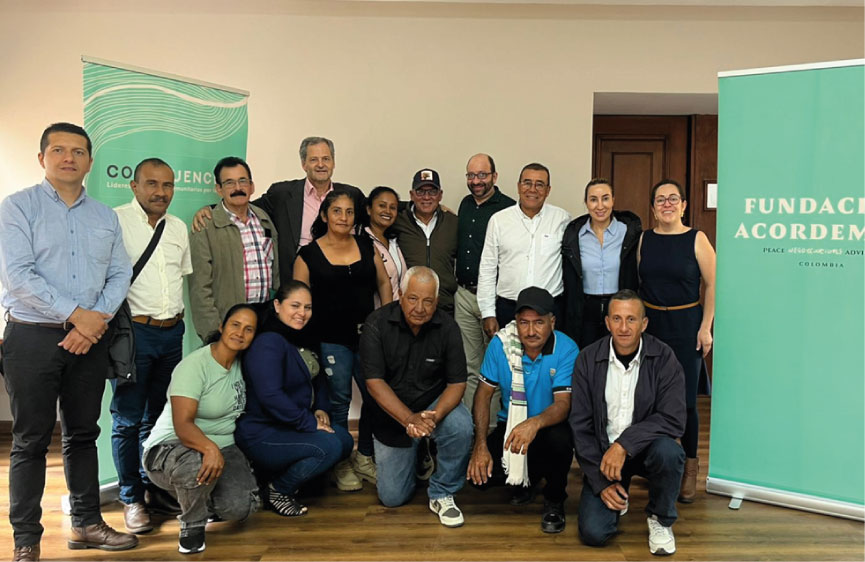
As part of the territorial work and following a series of virtual meetings, 12 leaders (7 men and 5 women) from southern Meta (Vistahermosa), Southern Córdoba (Tierralta) and Guaviare (El Retorno) gathered in Bogotá to discuss the impacts and challenges in terms of peace and security following the Total Peace policy and the actions needed to support communities in the face of new territorial dynamics and surround their peacebuilding efforts. The meeting was also attended by representatives of the Office of the Deputy Attorney General for Monitoring the Peace Agreement, the Ombudsman’s Office, the British Embassy, the Ford Foundation, the Swiss Embassy, the Canadian Embassy, Externado University and the University of the Andes.
First exchange to strengthen community oversight processes in the south of Tolima.

As part of a joint project with Fundación Ideas para la Paz, the first exchange for strengthening community oversight processes in southern Tolima was held in Chaparral (Tolima), with the participation of 20 leaders from the municipalities of Ataco, Chaparral, Rioblanco and Planadas.
